
By Jennifer Jacobs
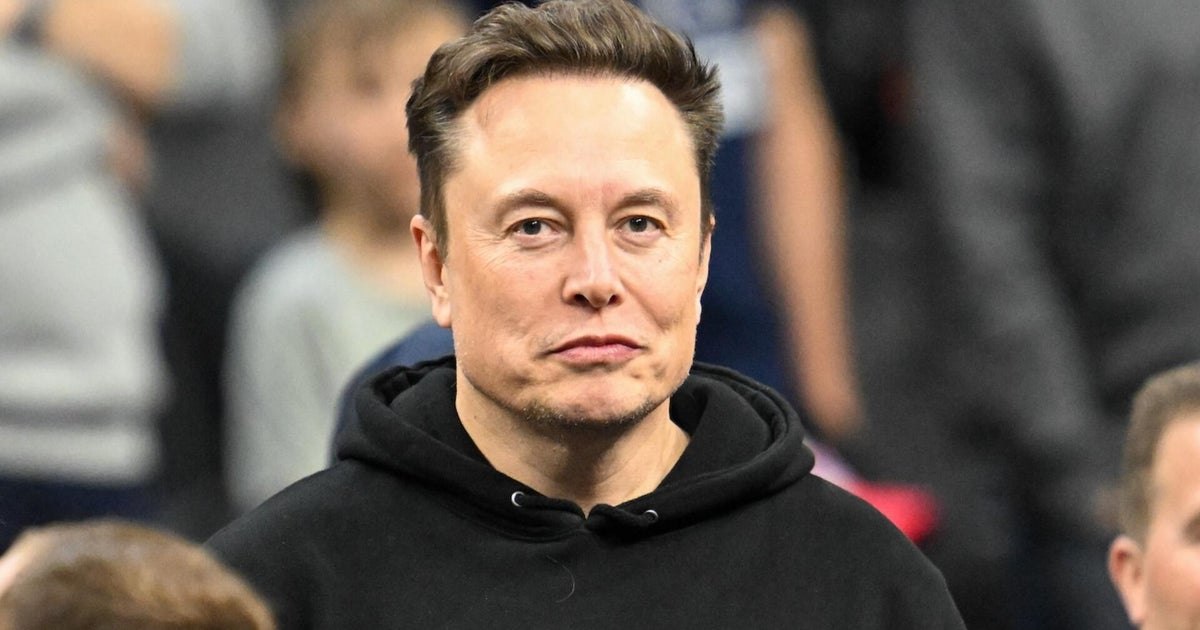
A decision by Elon Musk led to restrictions on Ukraine’s use of SpaceX’s satellite communications network, people familiar with the matter told CBS News.
The satellite service, which is used for drone operations, hitting certain targets and protecting sites in Ukraine, was slowed significantly last week.
Musk held multiple conversations with administration officials leading up to the order, the sources said. He wanted clarity on the president’s thinking on the matter. Musk has expressed distaste with his company being seen as profiting from the continued war between Russia and Ukraine.
It’s not clear how Musk’s order to curtail service was executed.
Musk licenses SpaceX’s Starshield technology to the U.S. government. He said last week the U.S. controls who can access the technology and what level of service those users receive.
“Any limits on speed or usage are decided by the US military and ultimately POTUS,” Musk, the world’s richest person, wrote on X.
Musk did not reply to a request for comment. CBS News has reached out to the White House and the Pentagon for comment.
The Wall Street Journal was first to report on Musk’s order.
The temporary restrictions came as a surprise to some officials inside the administration, who said neither Mr. Trump nor the Pentagon specifically ordered any limits meant to deliberately disrupt drone operations and battlefield communications.
Mr. Trump said Monday he was seeking details on who ordered the slowdown.
“I don’t know who it was, but I’d like to find out,” he said.
Defense Secretary Pete Hegseth said Tuesday the Pentagon has not manipulated the service.
“We haven’t pulled anything back. There are terms of service that ultimately need to be complied to. And that’s where Starlink has the option to make those decisions, but nothing’s changed from our view. We haven’t made any directives or anything like that,” Hegseth told reporters, adding that “we wish the Ukrainians, obviously, success.”
Zelensky told NBC News on Sunday there were still limits on Ukraine’s Starshield service.
What is Starshield?
Starshield is a military-grade satellite network made by SpaceX for the U.S. government and its partners. It runs on similar technology to its civilian sister, Starlink.
The U.S. government pays to use Starshield and controls who can access the technology. Its use has been limited to Ukraine and occupied territories. It is not available in Russia Starshield is essential to Ukraine’s armed forces as it allows personnel to communicate and carry out strikes, including by maintaining contact with drones across long distances.
There is no working alternative to Starlink, which has put a massive constellation of low-earth satellites into orbit, and no direct competitor comes close.
What happened in Ukraine?
Ukrainian officials and soldiers told CBS News the country’s military began experiencing sudden difficulties with Starshield equipment late Tuesday, including a throttling effect that made it more difficult to carry out missions with fast-moving drones. Sources in Ukraine’s Ministry of Defense said SpaceX had unilaterally imposed the Starshield restrictions.
Regular Starlink terminals have a 70 km/hr speed cap, that is, the speed at which internet can be used in a vehicle in motion. At rates faster than the cap, the internet degrades and is no longer usable.
Starshield has no artificial speed cap and is known to work at speeds of at least 160 km/hr. Strike drones equipped with Starshield cruise at 160 km/h or higher, and they’re the backbone of Ukrainian mid-range strikes.
Ukrainian units reported link drops at speeds as low as 90 km/hr, making those drones inoperable. The degradation of Starshield is estimated to have cost Ukraine tens of millions of dollars in losses, according to an analysis by Dimko Zhluktenko, a drone pilot and analyst in the Armed Forces of Ukraine.
Zelensky said Saturday the speed limits had prevented Ukraine from using Starshield to shoot down Shahed attack drones.
The Ukrainian leader wrote on X last week that “the Russians are trying to take advantage of the problems with Starlink in Ukraine, as our interceptor drones depend on this connection among other things.”
Zelensky has suggested there are still some restrictions. He told NBC News over the weekend the maximum speed was 161 km/hr, and he said Tuesday that he’d spoken with Secretary of State Marco Rubio about “the situation with Starlink/Starshield, which needs to be restored.”
The apparent restrictions drew swift pushback from U.S. lawmakers, with a bipartisan group of senators asking the Defense Department’s internal watchdog to investigate last week.
“There needs to be an investigation, we need to find out who these people are because lives are at risk and lives are lost over these things,” Republican Rep. Mike Turner of Ohio said on “Face the Nation with Margaret Brennan” over the weekend.
Why have Trump and Zelensky clashed?
Beyond the Starshield disruptions, Zelensky has said in recent days that Russia struck Ukraine without warning from the U.S., and deliveries of key interceptor missiles to Ukraine have slowed down.
A senior Pentagon official told CBS News on Monday there had been “no change to Department of War policy regarding intelligence sharing or any capabilities we are enabling Europeans to provide to Ukraine.”
Mr. Trump has grown increasingly frustrated with Zelenskyy in recent weeks, accusing him of not doing enough to seek an end to the Russia-Ukraine war.
The U.S. president argues the war is responsible for high energy prices. His administration waived restrictions on buying Russian diesel earlier this month in an effort to ease pressure on the price of the commodity, a move Zelenskyy argued could embolden Russian President Vladimir Putin. Mr. Trump also waived sanctions on Russia last week.
Mr. Trump said earlier this month that Ukraine and Russia had agreed to stop striking each other’s energy infrastructure — announcing an “energy ceasefire.” Zelenskyy initially said Ukraine was willing to abide by such an agreement, but that Russia’s strikes never ceased, and several days later he told the Financial Times his country would no longer hold off on striking Russian refineries because Russia was still attacking Ukrainian energy infrastructure.
The Russian government never confirmed that it had agreed to a ceasefire.
In a Newsmax interview late Thursday, Mr. Trump called Zelenskyy “not a good guy for us to deal with,” and argued Ukrainian strikes on Russian refineries would be a “disgrace,” as he urged both sides to make a deal while adding that the Ukrainian leader is harder to deal with than Putin.
“I’m not a big fan of Zelenskyy,” Mr. Trump said.
Original Source: https://www.cbsnews.com/news/elon-musk-ukraine-spacex-starshield-trump-administration/