
U.S. Votes Against UN AI Panel As 117 Nations Approve It
By Ron Schmelzer
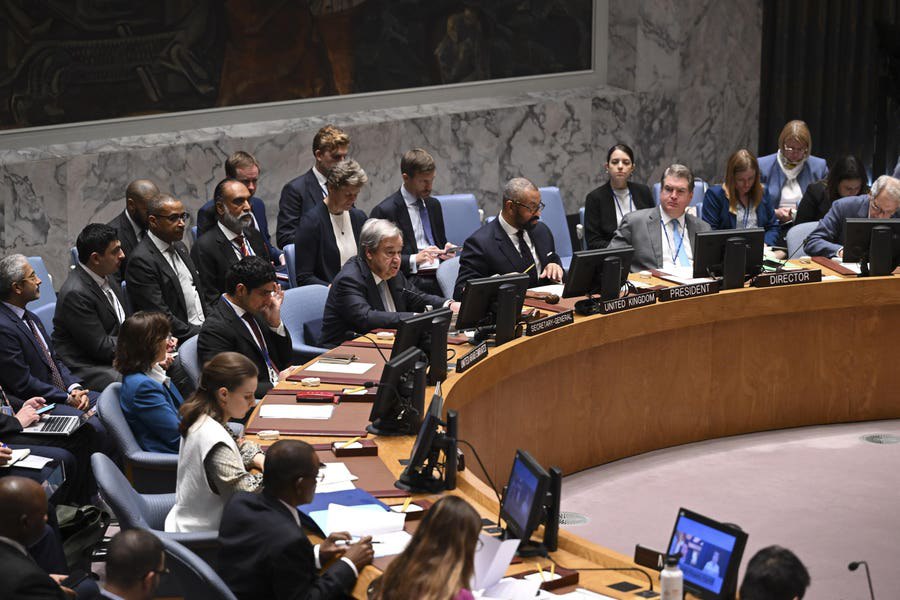
The UN General Assembly has approved the appointment of a 40 member Independent International Scientific Panel on Artificial Intelligence, a new body meant to assess AI’s impacts and risks through recurring scientific reports. The vote was almost entirely for the panel with 117 countries supporting the move, while two voted against and two abstained. The United States voted no, joined by Paraguay. Ukraine abstained, citing objections to the inclusion of a Russian expert on the panel.
What The Vote Was Actually For
Despite some commentary that frames this as “the UN regulating AI,” the General Assembly vote was narrower and more procedural. Member states were voting to approve the creation and membership of a scientific assessment panel recommended by the UN Secretary General. The panel’s job is to produce regular assessments of AI’s real world effects, spanning economic and social impacts and a catalogue of risks. The UN describes it as the first fully independent global scientific body focused on bridging knowledge gaps in AI across member states.
From the perspective of how the UN works, the scientific assessment body is not a treaty body and it does not create binding rules by itself. It is closer to a mechanism for collecting and analyzing evidence and publishing conclusions under a UN banner.
The Independent International Scientific Panel on AI that was just approved is a 40 person group intended to deliver annual reporting on AI opportunities and risks, using existing research and cross disciplinary expertise.
The main goal of the panel is to deliver a recurring assessment report that can serve as a grounded reference for governments and stakeholders that aim to pursue further rule-making or regulation. A similar approach was taken with how the climate world relies on IPCC reports. A panel that writes authoritative summaries can shape what policymakers argue about, even when the panel does not write laws.
This panel is not a global AI regulator. It cannot fine companies, approve models, revoke access to infrastructure or impose licensing requirements. The General Assembly vote did not create an enforcement agency. It did not pass a treaty. It did not install an inspection regime.
That said, reports can still carry weight in a quieter way. Governments, standards bodies, procurement teams and regulators routinely cite “independent assessments” when they want to justify new requirements. The panel’s influence will depend less on formal authority and more on whether its work product becomes a trusted reference.
The panel has 40 members, expected to serve multi year terms. According to reporting on the selection process, the candidate pool ran into the thousands, with an independent review process involving UN related entities and partners. The membership is not limited to computer science. The roster includes people from adjacent disciplines, including public interest and social impact backgrounds. One widely reported example is Nobel Peace Prize laureate Maria Ressa.
Why The U.S. Voted Against It
The United States objected on mandate and process grounds. In public remarks reported by major outlets, the U.S. delegation argued that AI governance should not fall under UN jurisdiction and raised concerns about transparency in how the panel was formed.
There is also a strategic subtext to all that, however. AI capability is tied to economic competitiveness and national security. The U.S. criticism, as reported, included warnings about how international control could potentially be influenced by authoritarian regimes. A UN anchored “scientific consensus” could become a platform for countries with very different political systems and industrial priorities to shape international expectations.
Scientific bodies live and die on perceived independence. When a member state publicly links membership to geopolitical conflict and institutional ties, it signals the kind of scrutiny this panel will face, especially when its assessments touch sensitive areas like security applications, disinformation, surveillance and critical infrastructure.
It is worth noting how unusual the U.S. “no” vote can be in many General Assembly contexts, especially when many U.S. allies still vote yes. In this case, the U.K. and many European states supported the panel. The second “no” vote came from Paraguay.
Ukraine’s abstention was explicit and more specific. Ukraine said it abstained because it objected to a Russian panel member, Andrei Neznamov, cited in reporting as an expert in AI regulation, ethics and governance. Ukraine was not the only abstention. Tunisia also abstained, according to reporting.
While the panel received the UN approval based on the vote, the U.S. brings disproportionate influence in AI research, compute, model development and global platform ecosystems. A panel that lacks buy-in from the U.S. government may still be influential, but it will operate under a political cloud in Washington, and that can ripple into how U.S. agencies and U.S. aligned institutions treat its recommendations.
The vote does not mean the world has agreed on how to govern AI. It signals that a large majority of member states want a shared scientific reference point for AI’s impacts and risks, under a UN umbrella, even if a small set of countries object strongly.
The division is also a reminder that AI governance is now inseparable from geopolitics. The U.S. “no” vote points to anxiety about mandate creep and strategic disadvantage. Ukraine’s abstention highlights how questions of membership and affiliation can quickly become questions of legitimacy.
The next phase will determine whether the panel becomes a widely cited reference or a document that different camps cite selectively. That depends on the quality of its methods, how it handles conflicts and dissent and whether it produces assessments that are concrete enough to be useful without turning into a proxy argument about who gets to define responsible AI.
Original source: https://www.forbes.com/sites/ronschmelzer/2026/02/13/un-approves-new-global-ai-science-panel-as-us-votes-no-ukraine-abstains/