
By Duarte Dias
What to know about the Iran war:
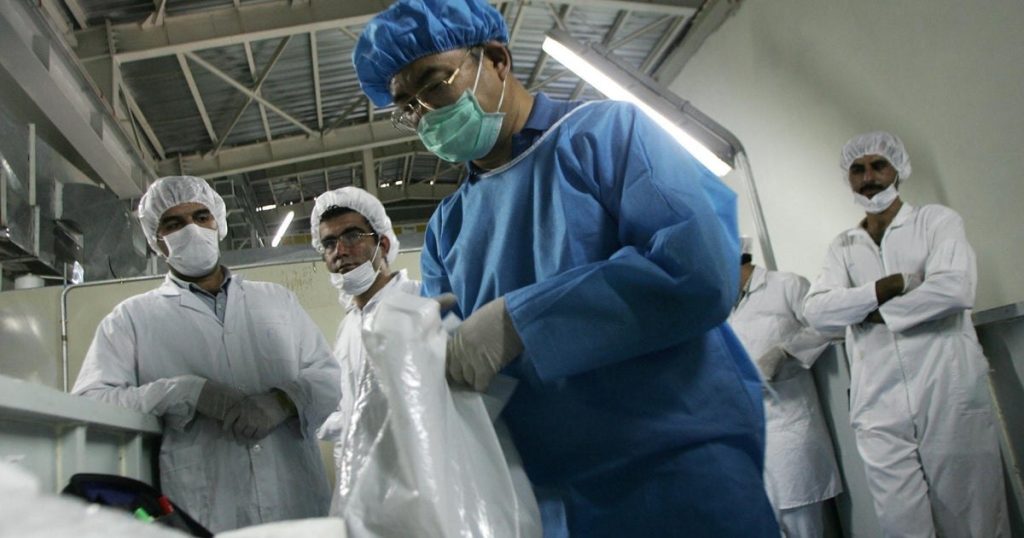
- The head of the International Atomic Energy Agency said Wednesday that the U.N. agency will return to inspect Iran’s nuclear sites, as agreed, but he indicated there’s no rush after conflicting messages from Washington and Tehran.
- Israel’s defense minister said Wednesday that there had been “no American demand for Israel to withdraw from Lebanon,” as Israel’s fight with Iranian-backed Hezbollah continues to complicate efforts toward a wider U.S.-Iran peace deal.
- The Senate late Wednesday rejected a measure aimed at restricting President Trump’s power to wage war against Iran. It came just one day after senators narrowly approved a separate House-passed war powers resolution that was seen as a symbolic rebuke to Mr. Trump.
Rubio in Bahrain as US-Iran diplomacy ramps up
Secretary of State Marco Rubio was in Bahrain on Thursday after promising Gulf allies that Washington would protect their interests as it seeks to hammer out a final settlement to end the war with Iran.
Rubio is on a regional tour to reassure the Gulf states, which were targeted by Tehran’s missiles and drones during the conflict and saw their crucial oil and gas shipments effectively cut off by an Iranian blockade of the Strait of Hormuz.
During a visit to Kuwait City, Rubio said Washington would be on the same page as Gulf states as it wrangles with Iran over a permanent settlement to the conflict.
“We’re going to be completely aligned with our partners in the Gulf,” he said, adding that the United States would “engage them on conversations about every decision that’s made with regards to this negotiation.”
Rubio is due to attend a Gulf Cooperation Council meeting in Bahrain on Thursday after sitting down with the leaders of Kuwait and the United Arab Emirates on Wednesday.
The initial U.S.-Iran deal, which sets out a 60-day negotiating process aimed at reaching a long-term agreement, failed to address Gulf nations’ long-standing concerns about Iran’s missile program and regional proxies.
But Rubio insisted Washington was “not going to do anything that undermines the security of our allies.”
Senate rejects measure to restrict Trump’s Iran war powers as key Republicans shift votes
The Senate late Wednesday rejected a measure aimed at restricting President Trump’s power to wage war against Iran, in a victory for the president and Senate GOP leadership as they seek to quell congressional discontent with the Trump administration’s Iran strategy.
The procedural motion failed in a 50 to 47 vote, with two Republicans — Sens. Susan Collins and Lisa Murkowski — voting in favor of advancing the resolution by Democratic Sen. Tim Kaine, siding with most Democrats. Republican Sen. Rand Paul voted present, and Democratic Sen. John Fetterman voted no.
Just one day earlier, four Republicans voted yes on a separate House-passed war powers resolution, allowing it to narrowly pass. Those same four GOP lawmakers voted to advance the Kaine resolution in an earlier procedural vote last month — the first time an Iran war powers resolution had moved forward in the Senate after seven failed attempts.
Kaine’s resolution would have directed Mr. Trump to “remove the United States Armed Forces from hostilities within or against Iran,” unless authorized by Congress. It would have required the president’s signature if it had passed the House and Senate, unlike Tuesday’s resolution, which will not go to the president’s desk.
The measure’s practical impact is unclear since the president would likely veto the measure even if it passes, and the Trump administration has argued the U.S. is no longer engaged in hostilities with Iran since the two sides entered into a ceasefire. The administration has also said it believes the 1973 War Powers Resolution — the law that set up a process for Congress to push back on presidential uses of military force — is itself unconstitutional.
Trump says U.S. may never solve who was behind missile strike on girls’ school in Iran
Speaking to reporters in the Oval Office, President Trump claimed the U.S. may never know whose missile was responsible for striking a girls’ school in Minab, Iran, in late February at the start of the war. And Defense Secretary Pete Hegseth declined to give a timeline on releasing the results of the Pentagon’s investigation.
Iranian authorities said the strike on Shajareh Tayyebeh girls’ elementary school killed over 160 people, including schoolchildren. A preliminary U.S. assessment said the U.S. was “likely” responsible for the deadly attack, but that it was not intentional, a person briefed on the preliminary intelligence told CBS News in March.
The president said he hasn’t seen a report on the deadly incident.
“I have not seen it, no. At some point. Well, I have to wait for it to be complete,” the president said.
“I don’t know that they’re ever going to solve that problem,” he continued. “I mean you could ask Pete. But I don’t know that they’re ever, they’re going to say it was one of our missiles, Pete, I don’t know that they’re ever going to solve that problem in terms of whose fault was it. Because there were missiles flying all over the place. And it’s horrible what happened. But there were missiles flying all over the place. And somebody said it was our missile? Well maybe it wasn’t our missile, but I’ve seen nothing to lead me to believe it was. There were plenty of missiles being flown by other people.”
Hegseth said the Pentagon has “taken the investigation very seriously,” although he didn’t say when a report would be released.
“When the appropriate time is right, whatever that outcome is, that’ll be the time to divulge it,” Hegseth said.
“I don’t think it was us,” Mr. Trump added.
NATO Secretary-General Mark Rutte defends Europe’s posture toward Iran
In an Oval Office meeting with President Trump, NATO Secretary-General Mark Rutte said the president has done something important with Iran in working to prevent their nuclear capabilities.
Rutte said thousands of planes have taken off from U.S. bases in Europe during the operation in Iran. Still, Mr. Trump said he wishes NATO could have done more. The president said he was “disappointed” with most of the European countries.
Rutte came prepared with charts on European defense spending and investments in the U.S.
The secretary-general said he doesn’t have many disagreements with Mr. Trump, but defended Germany and other countries that he says have worked hard to keep bilateral commitments.
“I don’t have many disagreements with the president of the United States,” Rutte interjected. “Here I have slightly, because I do believe there is reason for disappointment, absolutely. But my argument is this. These are isolated cases … I would argue it would have been very difficult to do Iran without having Europe as a power protection platform for the United States.”
Sen. Cassidy says he and Trump got into heated exchange over Iran
Republican Sen. Bill Cassidy of Louisiana said he confronted the president over the war with Iran on Wednesday and described the heated exchange for reporters.
Cassidy, who lost his Senate primary to a Trump-backed challenger in May, said he told the president during a meeting with GOP senators that “our original objectives have not been achieved, and I want to know what’s going on.”
He said he would be voting to rein in the president’s ability to strike Iran “until I get a briefing.”
“At which point, as I recall, he did not particularly care for my comments. Raised his voice,” Cassidy said. “I lost my temper. That’s not appropriate. It’s the Irish in me. But I, again, matched his tone and his volume.”
At one point, Mr. Trump sternly told Cassidy to sit down, after questions arose about the War Powers Resolution, sources directly familiar with the meeting told CBS BNews.
60% of voters think U.S. military action against Iran was not worth it: Poll
A majority of American voters think U.S. military action in Iran was not worth it, according to a new Quinnipiac poll.
Sixty percent of voters think the U.S. military action wasn’t worth it, while 34% think it was worth it, according to the poll. An overwhelming number of Democrats (93%) believe it was not worth it, while 75% of Republicans think it was worth it. Independents fall at a 66-29% split against the action.
“After months of diplomatic fits and starts, global economic repercussions and a broad loss of life in the region, a majority of voters make their feelings clear: the Iran war was a bad idea,” Quinnipiac University Polling Analyst Tim Malloy said in a statement.
The poll also asked voters what they thought about the Iran memorandum of understanding. Some 59% of respondents are either not so confident or not confident at all that the deal will work, according to the poll. Also, 61% of respondents said it was very likely or somewhat likely Iran will develop nuclear weapons.
Only 38% of voters approve of how President Trump is handling his job as president.
Republican House members raise concerns about Iran MOU
House Republicans raised concerns on Wednesday about the Trump administration’s Iran memorandum of understanding, particularly around sanctions relief, unfreezing assets, nuclear inspections and the potential cost of implementation, even as many continue to support the president’s military action against Iran.
Nebraska Rep. Don Bacon said he would be “very hesitant to give $1 to Iran,” arguing “money’s fungible” and warning any sanctions relief could ultimately benefit terrorism. Bacon also questioned reconstruction funding, saying, “Why would we be doing reconstruction of the IRGC government?”
Rep. Mike Lawler, of New York, said “any final agreement has to address the issue of the enriched uranium” and argued that “the enriched uranium is what matters here” as discussions continue around sanctions relief and unfreezing assets.
Georgia Rep. Rich McCormick said he is “not a big fan of the MOU” and questioned whether Iran would uphold its commitments.
“I just don’t trust them,” he said, adding he wants to see the administration’s “long-term plan and the strategy.”
Most of the Republicans, however, did support the administration’s $80 billion supplemental bill because the U.S. needs to restore its depleted stock of munitions.
Original source: https://www.cbsnews.com/live-updates/us-iran-trump-deal-nuclear-inspections-iaea-timing-not-essential/